🩸 Complete Guide (Blood Centres) as per National Blood Policy
In India, thousands of patients need blood every day — for accidents, surgeries, cancer treatment, and childbirth.
Yet many people ask:
👉 “Why is blood not available instantly?”
👉 “Why do hospitals ask for donors?”
👉 “Why are charges taken if blood is donated free?”
⚠️ The answers lie in understanding how these Centres actually work in India.
This article explains:
- ✅ Complete Blood Centre process
- ✅ Government rules (National Blood Policy)
- ✅ Why shortages happen
- ✅ What to do during emergency
🧠 What is a Blood Centre?
A Blood Centre is a licensed medical facility that:
✔️ Collects blood from donors
✔️ Tests it for safety
✔️ Separates it into components
✔️ Stores it properly
✔️ Supplies it to hospitals
👉 Blood Centres are strictly regulated in India.
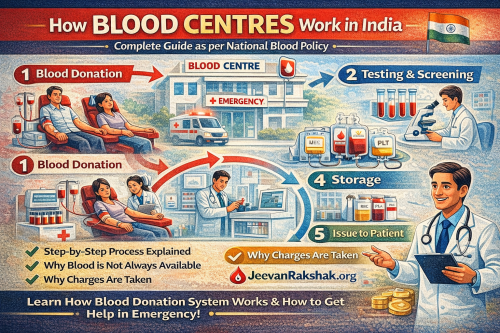
🔄 Step-by-Step: How These Centres Work
Understanding this process helps you avoid panic during emergencies.
🩸 Step 1: Blood Donation
- Voluntary donors donate blood
- Donation camps & hospitals collect blood
👉 One donation = can save up to 3 lives
🔬 Step 2: Testing & Screening
Every unit is tested for:
- HIV
- Hepatitis B & C
- Malaria
- Other infections
⚠️ Unsafe blood is discarded immediately
🧪 Step 3: Component Separation
Blood is divided into:
- Red Blood Cells (RBC)
- Plasma
- Platelets
👉 This allows one unit to help multiple patients
❄️ Step 4: Storage
Each component has different storage conditions:
- RBC: Up to 35–42 days
- Platelets: Only 5 days
- Plasma: Up to 1 year
⚠️ This is why fresh donations are always needed
🏥 Step 5: Issue to Patient
Blood is given based on:
- Blood group matching
- Doctor’s requirement
- Availability
👉 Hospitals coordinate with these Centres
⚠️ Why Blood is Not Always Available
❗ 1. Blood Cannot Be Manufactured
👉 It only comes from human donors
❗ 2. Short Shelf Life
- Platelets expire in 5 days
❗ 3. Demand is Unpredictable
- Accidents
- Surgeries
- Emergencies
❗ 4. Lack of Regular Donors
👉 Many people donate only once
💸 Why Do These Centres Charge Money?
⚠️ Important Fact:
👉 Blood is NOT sold in India (as per National Blood Policy)
✅ Then What Are These Charges?
These Centres charge only for:
- Testing & screening
- Processing
- Storage
- Staff & equipment
👉 These are called processing charges
🚫 Replacement Donation – Reality vs Policy
📜 As per Policy:
👉 100% voluntary donation is recommended
⚠️ In Reality:
- Many hospitals still ask for replacement donors
- Reason: shortage of voluntary blood supply
💡 Important Understanding:
👉 Replacement donation is a system gap, not legal requirement
⚠️ Ground Reality: Why Voluntary Blood Donation Camps Are Still Limited
It has been observed in many regions that:
👉 Some hospitals with Blood Centres or standalone Blood Centres
👉 Do not actively conduct regular outdoor voluntary blood donation camps
🤔 Why Does This Happen?
One of the practical reasons often seen is:
👉 Availability of replacement blood donors
When patients are admitted:
- Families are asked to arrange donors
- These donors fulfill immediate blood requirements
- This reduces the pressure on Blood Centres to maintain large voluntary donor pools
⚠️ Understanding the Concern
While this may seem convenient in the short term, it creates challenges:
❌ No strong culture of regular voluntary donation
❌ Dependency on patient families during emergencies
❌ Delays in critical situations
❌ Inequality — patients without networks suffer more
📜 What Policy Recommends
As per National Blood Policy (India):
👉 The goal is:
- 100% voluntary, non-remunerated blood donation
👉 Replacement donation is not encouraged as a long-term solution
💡 Why Voluntary Blood Donation Camps Are Important
Regular camps ensure:
✔️ Stable blood supply
✔️ Reduced emergency panic
✔️ Better preparedness during disasters
✔️ Equal access for all patients
❤️ The Way Forward
To improve the system:
👉 Blood Centres should actively promote:
- Outdoor donation camps
- Awareness programs
- Regular donor networks
👉 Society should support:
Awareness campaigns
Voluntary donation culture
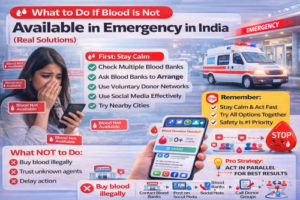
🚨 What To Do During Blood Emergency
✅ Step 1: Contact Blood Centres
Check nearby licensed Blood Centres
✅ Step 2: Arrange Donors
Reach out to:
- Friends & family
- Social groups
- Donor networks
✅ Step 3: Use Emergency Platforms
👉 Platforms like JeevanRakshak.org help guide you connect donors quickly
⚡ Step 4: Act Fast
👉 Delay can risk patient life
❤️ Role of JeevanRakshak.org
✔️ Guide you to Connect donors with patients
✔️ Guide you how to get verified Blood Centre information
✔️ Guide you how to Reduce panic & confusion
👉 Because every second matters
⚠️ Common Mistakes
❌ Assuming blood is always available
❌ Waiting till last moment
❌ Not arranging donors early
📢 Final Conclusion
Blood Centres in India follow a scientific and regulated system, but:
👉 Supply depends on voluntary donors
👉 Demand is unpredictable
👉 Shortages are real