🚨 Truth Every Donor & Patient Must Know
Blood donation is one of the most powerful life-saving acts.
Yet, in India, lakhs of people hesitate due to fear, myths, and misinformation.
👉 Result?
⚠️ Severe blood shortages during emergencies
⚠️ Patients struggle for blood in critical situations
This article clears the confusion with scientific facts + practical reality.
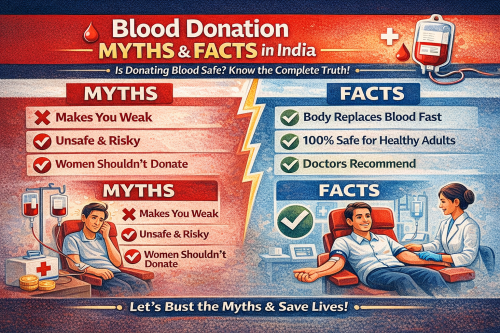
❌ Common Blood Donation Myths (And the Truth)
❌ Myth 1: Blood donation makes you weak
✅ Fact:
Your body replaces donated blood within:
- Plasma → 24–48 hours
- Red blood cells → Few weeks
👉 You can return to normal routine within a day
❌ Myth 2: Only young people can donate blood
✅ Fact:
- Age: 18 to 65 years
- Weight: Minimum 45–50 kg
👉 Healthy adults of all ages can donate
❌ Myth 3: Blood donation is unsafe
✅ Fact:
- Sterile, disposable needles are used
- No risk of infection
👉 Blood donation is 100% safe
❌ Myth 4: Women should not donate blood
✅ Fact:
Women can donate if:
- Hemoglobin is normal
- Not pregnant
👉 Women are equally important donors
❌ Myth 5: You need to be very strong to donate
✅ Fact:
👉 Even a normal healthy person can donate
You don’t need to be “extra strong”
❌ Myth 6: Blood is sold by blood banks
✅ Fact:
⚠️ As per National Blood Policy:
- Blood cannot be sold
- Only processing charges are allowed
👉 Voluntary donation is the backbone of the system
❤️ Why Blood Donation is Critical in India
India needs millions of units of blood every year.
Shortage happens due to:
- Lack of awareness
- Fear & myths
- Seasonal diseases (Dengue, accidents)
👉 One unit of blood can save up to 3 lives
🏥 Who Needs Blood?
Blood is required for:
- Accident victims
- Surgery patients
- Cancer treatment
- Thalassemia patients
- Childbirth complications
👉 Demand is constant and urgent
⏱️ How Often Can You Donate?
- Men: Every 3 months
- Women: Every 4 months
👉 Regular donation = stronger blood supply system
🧠 Health Benefits of Blood Donation
✔️ Reduces iron overload
✔️ Improves heart health
✔️ Burns calories
✔️ Free health checkup
👉 Donation is good for you and society
🚨 What Happens During Blood Shortage?
In emergencies:
- Families run hospital to hospital
- Social media appeals increase
- Treatment gets delayed
👉 This is where voluntary donors become lifesavers
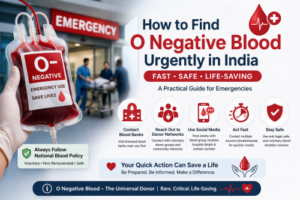
🔗 How to Find Blood in Emergency
If blood is urgently needed:
- Contact nearby blood banks
- Reach out to donor groups
- Use platforms like JeevanRakshak.org
👉 Quick action can save life
❤️ Role of JeevanRakshak.org
We aim to:
✔️ Guide you to Connect donors with patients
✔️ Guide you to get verified emergency information
✔️ Guide you to reduce panic during crisis
👉 Because every second matters
⚠️ Important Do’s & Don’ts
✅ Before Donation:
- Eat properly
- Stay hydrated
- Carry ID
❌ Avoid:
- Alcohol before donation
- Donating when sick
📢 Final Message
Blood donation is not dangerous —
👉 Ignorance is
By breaking myths, we can:
✅ Increase donors
✅ Reduce shortage
✅ Save thousands of lives
🚀 Want to Become a Blood Donor?
👉 Register today and be a lifesaver
💬 Join donor network via JeevanRakshak
📞 Get connected instantly during emergencies